The Hidden Costs of Buying a $2M+ Luxury Home in Pleasanton (2026 Audit)
Pleasanton Luxury Real Estate & Tax Advisory
Most executive buyers who reach the $2M+ price tier in Pleasanton arrive well-prepared on paper: pre-approved for jumbo financing, financially sophisticated, and clear on their architectural preferences. What consistently catches them off guard is the severe delta between what a California property costs to buy and what it costs to carry. That gap in Pleasanton is wider than many expect, and it does not show up on the MLS listing sheet.
I have represented relocating families, move-up buyers, and investors across the Tri-Valley market. The hidden costs modeled below are not theoretical—they are the line items that surface in the title report, trigger supplemental tax bills, and become glaringly apparent during the first Pleasanton summer with a swimming pool and multi-zone HVAC system. Read this fiduciary audit before removing contingencies on your purchase.

Direct Answer: The true all-in monthly carrying cost of a $2M+ Pleasanton home (with 20% down and 6.75% jumbo financing) typically ranges from $14,800 to $15,100+ per month. The largest "hidden" cost is the Proposition 13 property tax reset: while the prior owner's tax bill may have been $6,000/year based on a decades-old assessment, the new buyer’s bill immediately resets to 1.15%–1.25% of the $2M purchase price, resulting in a $23,000 to $25,000 annual tax liability (~$2,083/month), plus post-close supplemental tax bills. Additional hidden costs include mandatory HOA transfer fees ($1,000–$3,000 at closing), Wildland-Urban Interface (WUI) hillside fire insurance premiums, and aging system replacements (roof, sewer lateral) in Pleasanton's established 1980s–1990s housing stock.
What Does a $2M Home in Pleasanton Actually Cost Each Month?
The true monthly cost of a $2M home—including principal, interest, taxes, insurance, utility load, and maintenance reserves—is significantly heavier than online mortgage calculators project. Here is a conservative 2026 fiduciary model assuming a 20% down payment on a 30-year jumbo fixed loan at approximately 6.75% (Note: rates are illustrative; confirm with your local underwriter):
*Note: Earthquake insurance, widely carried by Bay Area homeowners, is excluded above. If opted into the California Earthquake Authority (CEA), expect an additional $150 to $400 per month depending on deductibles and fault line proximity.
The Proposition 13 Property Tax Trap Most Buyers Walk Into
California’s Proposition 13 caps annual assessed property value increases at 2% for existing owners. However, the moment a home is conveyed in escrow, the assessment resets to the full purchase price.
The Reset Reality Check:
The tax figure displayed on an MLS sheet or Zillow listing is based on the current owner’s decades-old assessment, which might only be $600,000. Their annual tax bill is roughly $7,000. When you purchase that home for $2,000,000, your new Alameda County tax bill resets to approximately 1.25%, pushing your annual liability to $25,000 (a $18,000 annual increase).
The Second Wave (Supplemental Taxes): Following closing, the Alameda County Assessor issues supplemental tax bills representing the pro-rated difference between the old and new assessed values. Because these bills are mailed directly to you—and are not paid by your lender’s escrow impound account—unprepared buyers face a surprise $4,000 to $8,000 cash obligation months after moving in.
The fiduciary directive: Always pull the Assessor’s Parcel Number (APN) and manually calculate 1.25% of your target offer price. Never rely on the listing data for monthly budgeting. For detailed guidance on transferring your existing tax basis, read our Pleasanton seller guide to property taxes and Proposition 19.
HOA Fees: Transfer Costs, Reserve Risk & CC&R Restrictions
In Pleasanton's luxury enclaves, mandatory HOA dues range from basic shared landscaping fees to $600+ in gate-guarded communities. But the recurring monthly fee is only the surface layer of financial exposure:
- Escrow Transfer & Move-In Fees: Many premium associations charge one-time capital reserve contributions, document transfer fees, and move-in deposits at closing. These can add $1,000 to $3,000 to your cash-to-close requirements.
- Special Assessment Vulnerability: If an HOA’s Reserve Study reveals underfunded accounts (a common condition in aging California HOAs), the board possesses statutory authority to levy special assessments for roof replacements, private road paving, or gate automation. Reviewing the reserve ratio during your contingency period is non-negotiable.
- The CC&R Straitjacket: Buyers frequently discover post-closing that their luxury HOA prohibits short-term rentals, heavily restricts ADU (Accessory Dwelling Unit) construction, forbids RV/boat storage on the property, and enforces 60-to-90-day approval windows for basic architectural or solar installations.
If you are evaluating gated communities, examine our complete line-by-line breakdown in Ruby Hill vs. Castlewood HOA fees and country club costs.
Deferred Maintenance: The System Risk in Older $2M Estates
A $2 million price tag does not guarantee current mechanical systems. The vast majority of Pleasanton’s premier executive neighborhoods (like Kottinger Ranch and Vintage Hills) were constructed between the late 1980s and early 2000s. Consequently, major structural components are approaching the end of their design life.
Beyond the standard home inspection, a $2M purchase mandates four specialized structural audits:
- Video Sewer Lateral Scope: Root intrusion and clay pipe degradation are endemic in mature, tree-lined neighborhoods. Full lateral replacement costs $10,000 to $25,000+.
- Roofing & Underlayment Certification: Heavy concrete tile roofs mask degrading waterproof underlayment. A full 3,500 sq. ft. re-roof demands a $30,000 to $60,000 capital expenditure.
- HVAC Multi-Zone Audits: Dual-zone condensing units and ducting from 2005 require replacement, not servicing.
- Geotechnical / Drainage Assessment: Tri-Valley hillside parcels and expansive clay soils frequently trigger retaining wall shifts and foundation perimeter drainage failures.
Skipping $1,500 in specialized inspections exposes you to $100,000 in immediate capital risk. For buyers considering scraping and building ground-up instead, read our guide on new construction and municipal permitting in Pleasanton.
The Compounding "Hidden" Cost of Tri-Valley Commute Friction
Pleasanton occupies the highly strategic I-580 and I-680 intersection, but evaluating commute times at 2:00 PM on a Sunday via Google Maps creates dangerous lifestyle assumptions. The Bay Area commute has shifted from a concentrated two-hour window into an extended period of staggered congestion.
- Silicon Valley Corridor (South I-680 to Highway 237): Requires 45 to 75+ minutes during peak morning hours.
- San Francisco Financial District: Driving takes 50 to 90 minutes. Riding BART from the Dublin/Pleasanton station takes ~48 minutes of transit time, but peak-hour parking scarcity adds 15 to 25 minutes of platform logistics.
For dual-career households, an extra 30 minutes of commute time translates directly into thousands of dollars in extended childcare costs, deferred household maintenance, and quality-of-life deterioration.
New Construction vs. Established Estates: The Mello-Roos Factor
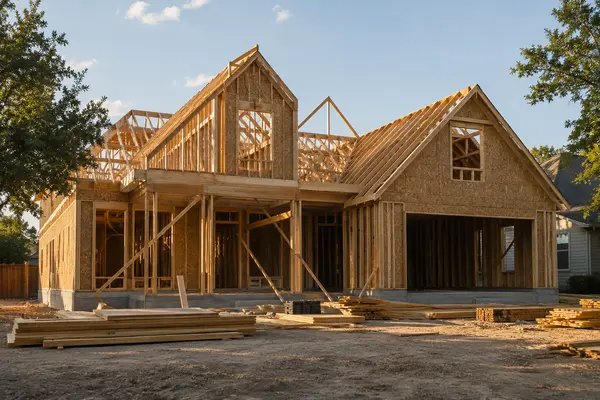
The intuitive assumption is that new construction inherently costs less to carry because HVAC and roof systems are under builder warranty. In the Tri-Valley, that assumption is mathematically flawed.
Newer master-planned communities across the county line (like Dublin Ranch or Boulevard) are encumbered by Mello-Roos Community Facilities District (CFD) assessments, which finance new school and utility infrastructure. These bonds can add $2,000 to $6,000+ per year directly onto your property tax bill.
Established Pleasanton resale tracts typically carry zero Mello-Roos. We evaluate this exact $1,000/month carrying cost disparity in our direct analysis of Pleasanton vs. Dublin real estate and taxes, as well as our three-city breakdown: What $2M Buys in Pleasanton, San Ramon, and Danville.
Cash at Closing: Title Insurance, Impounds & Transfer Taxes
Closing costs for a $2M to $2.5M Pleasanton acquisition typically span 2% to 4% of the purchase price ($40,000 to $100,000) in liquid cash due at signing, separate from the down payment. Primary line items include:
- Lender origination points and underwriting fees.
- Title insurance premiums and escrow settlement charges.
- Prepaid Property Taxes & Impound Accounts: Jumbo lenders frequently require 2 to 6 months of property taxes to be front-loaded into an impound account. At a $25,000 annual tax burden, this requires a massive upfront cash outlay.
- County and City transfer taxes (customarily negotiated between buyer and seller in Alameda County).
The Five Most Common Reasons Pleasanton Luxury Escrows Fail
- Appraisal Gaps: When aggressive offer prices outpace 90-day closed-sale comps, the appraisal falls short. A 4% gap on a $2.5M home requires the buyer to front $100,000 in cash or successfully renegotiate.
- Major Inspection Findings: Roof decking failures, extensive dry rot, or collapsed clay sewer laterals trigger panic when sellers refuse to issue closing credits.
- HOA Constraint Discovery: Buyers discovering on Day 14 of escrow that the CC&Rs strictly prohibit their planned exterior ADU or require 60 days to approve a solar installation.
- Jumbo Underwriting Friction: Late-stage loan denial caused by volatile Restricted Stock Unit (RSU) valuations, complex K-1 self-employment income, or sudden employer verification issues.
- Commute Reality Checks: Buyers driving the I-680 corridor at 8:00 AM for the first time after signing the contract, realizing the transit logistics are untenable for their dual-career household.
Frequently Asked Questions
What are the typical all-in monthly costs for a $2M home in Pleasanton, CA?
The all-in monthly cost for a $2M Pleasanton home typically ranges from $12,000 to $16,000 or more, depending on HOA obligations and loan structure. Core components include principal and interest (approximately $10,400 at 80% LTV and 6.75%), property taxes (roughly $2,083 per month at an effective rate of 1.25%), homeowners insurance, utilities, and a maintenance reserve. HOA dues in Pleasanton luxury communities can add $350–$650 or more per month. Earthquake insurance, if carried, adds another $150–$400 monthly.
How much more will a new buyer pay in property taxes compared to the current owner on a Pleasanton home?
Potentially significantly more. California's Proposition 13 limits annual assessed value growth to 2% for existing owners, so longtime Pleasanton homeowners may be taxed on an assessed value far below current market. When a home sells at $2M, the assessment resets to the full purchase price. If the prior owner's assessed value was $600,000, the new buyer's annual property tax bill could be $14,000–$16,000 higher per year. New buyers should also budget for supplemental tax bills issued by the Alameda County Assessor in the months following purchase.
What hidden fees do Pleasanton HOAs charge when buying a luxury home?
Beyond ongoing monthly dues, Pleasanton HOAs commonly charge one-time transfer fees, capital reserve contributions, and move-in fees at closing, which can add $1,000–$3,000 or more. Buyers should request the HOA's reserve fund study and budget: underfunded reserves can lead to special assessments after purchase. HOA document review and resale certificate fees (required for disclosure) can add $300–$600 to closing costs. CC&Rs may also restrict short-term rentals, ADU construction, RV storage, and architectural changes.
Should I waive the appraisal contingency when buying a $2M home in Pleasanton?
Only after carefully modeling the downside. Waiving the appraisal contingency can strengthen a competitive offer but transfers full price risk to the buyer. At a $2M purchase price, a 4–5% appraisal shortfall means $80,000–$100,000 in additional cash the buyer must bring to closing or renegotiate with the seller. This is a strategic risk decision that depends on comparable sales data, property uniqueness, and the buyer's cash reserves — not a default competitive tactic.
What is a realistic annual maintenance budget for a $2M home in Pleasanton?
A conservative benchmark for a $2M Pleasanton home in good condition is 1% of purchase price annually, or $20,000 per year, covering routine upkeep and minor repairs. Homes with aging systems, a pool, mature landscaping, or deferred maintenance warrant a 1.5–2% reserve, or $30,000–$40,000 per year. These figures do not include major capital replacements such as a full roof ($30,000–$60,000), HVAC system, or sewer lateral ($10,000–$25,000), which should be budgeted separately based on system age.
Is earthquake insurance worth it for a $2M home in Pleasanton?
Pleasanton sits in proximity to the Calaveras fault and within the broader Bay Area seismic zone, making earthquake insurance a relevant consideration for $2M+ homeowners. The California Earthquake Authority offers policies with varying deductible structures; costs depend on home age, construction type, and proximity to active faults. At a $2M replacement value, the cost of self-insuring seismic risk is substantial. Most financial advisors and insurance professionals recommend obtaining a quote and evaluating coverage before dismissing it.
How competitive is the Pleasanton luxury market for $2M+ homes in spring 2026?
The $2M+ segment in Pleasanton is active but not uniformly competitive in spring 2026. Homes in top school zones that are move-in ready consistently attract multiple offers during the February–June window, while properties with deferred maintenance or in secondary locations have more negotiating room. Pleasanton's overall market shows homes selling in approximately two weeks on average, with limited inventory. Offer positioning and contingency structure matter more than simply being the highest price in most situations.
What are the most common reasons luxury home deals fall apart in Pleasanton?
The five most common deal-failure points for $2M+ Pleasanton transactions are: (1) appraisal gaps when list prices outpace closed-sale comps; (2) major inspection findings such as roof, sewer lateral, drainage, or foundation issues in older homes; (3) late discovery of HOA CC&R restrictions conflicting with the buyer's plans, such as rental caps or ADU prohibitions; (4) jumbo loan underwriting complications from stock-heavy or self-employment income, or employment changes during escrow; and (5) commute reality checks when buyers experience actual rush-hour conditions for the first time after going into contract.
How do Pleasanton luxury home prices and ownership costs compare to Danville, Alamo, and Diablo?
Pleasanton, Danville, Alamo, and Diablo each serve distinct buyer profiles in the East Bay luxury market. Pleasanton offers strong schools, BART access, and more inventory at the $2M price point, making it practical for dual-income households with commutes in multiple directions. Danville and Alamo carry a prestige premium with larger lots and a different community character but less transit access. Diablo represents the most exclusive and limited inventory tier. Property tax obligations reset at purchase in all four locations under Proposition 13, so the tax comparison depends on acquisition price, not city alone. For a full side-by-side breakdown, see the Pleasanton vs. Danville, Alamo, and Diablo luxury home comparison at venemahomes.com.
What closing costs should first-time luxury buyers expect on a $2M Pleasanton home?
Closing costs for a $2M Pleasanton purchase typically range from 2% to 4% of the purchase price, or $40,000–$80,000 in cash due at closing beyond the down payment. Main components include lender origination and underwriting fees, title insurance, escrow fees, prepaid property taxes (often 2–6 months), prepaid homeowners insurance, and HOA transfer and document fees where applicable. Natural hazard zone disclosures and HOA resale certificate fees are easy to overlook but should be accounted for in pre-closing budgets.
Categories
Recent Posts