Are Tech Layoffs Actually Hurting Your Tri-Valley Home Value? (2026 Market Analysis)
Tri-Valley Market Intelligence & Equity Advisory
Every week I consult with Tri-Valley homeowners who read the same regional headline—Bay Area home prices dropped 3.2%—and assume their personal property equity has deteriorated. In most micro-markets, that assumption is incorrect. The reason is fundamental to real estate underwriting: the San Francisco Bay Area is not a single, homogeneous market. Alamo's median single-family price gained 8.1% year-over-year to $3.1 million, while San Ramon contracted 10.9% to $1.5 million. Both data points are accurate. Understanding which economic reality governs your specific parcel address is the entire game.
This fiduciary guide is engineered for Tri-Valley homeowners evaluating equity risk: analyzing whether corporate tech contractions have impaired property values, and whether liquidity from AI-sector wealth creation can offset headcount reductions at legacy firms like Workday and Salesforce.
Direct Answer: Tech layoffs have exerted selective, localized pressure on Tri-Valley mid-market home values without triggering broad regional declines. The market is experiencing a pronounced K-shaped bifurcation: Upper-tier luxury properties ($2.5M to $5M+) in Alamo (median $3.1M, +8.1% YoY), Danville (median $1.9M, +8.2% YoY), and Ruby Hill are insulated and appreciating, sustained by AI sector wealth creation, executive equity liquidity, and inventory scarcity. Conversely, the $1.2M to $1.8M mid-market—concentrated in San Ramon (-10.9% YoY) and attached East Dublin inventory—has faced downward pressure and extended marketing timelines (from 12 to 25+ days on market) as corporate restructuring directly impacts salaried mid-level tech workers.
How Have Tech Layoffs Actually Affected Tri-Valley Home Prices?
Tech sector downsizing has exerted selective pressure on the mid-market price tier ($1.2M to $1.8M), where the primary buyer demographic is a salaried mid-to-senior tech employee. In contrast, luxury estates have benefited from AI liquidity and multi-generational equity. Here is the verified city-level data across the Tri-Valley:
What Did the Workday Layoffs Specifically Do to Pleasanton's Housing Market?
Workday filed California WARN notices for 617 Pleasanton-based employees in 2025 and an additional 154 local employees in early 2026—representing 771 documented job eliminations at its Stoneridge Mall Road headquarters.
The On-the-Ground Impact on Pleasanton Subdivisions:
Workday is not a distant Silicon Valley campus whose headcount adjustments arrive as a statistical abstraction. Many of these engineering and product leaders reside in local neighborhoods like Val Vista, Vintage Hills, and Del Prado. When corporate cuts concentrate in a single municipality, a percentage of prospective buyers exit the market, and some households transition into reluctant sellers.
- Marketing Timelines Extended: Average days on market in central Pleasanton expanded from 12 days to 25 days.
- Appraisal & Comps Friction: Sellers attempting to price from peak 2024 comps encountered pushback, requiring strategic price adjustments.
- Structural Price Support: Pleasanton's core value pillars—Amador Valley and Foothill High School attendance zones, downtown walkability, dual BART connectivity, and diversified tenants across Hacienda Business Park—prevented severe price capitulation.
The takeaway for sellers: Price to where active spring 2026 buyers are underwritten, not to 2024 peak expectations. Properties staged professionally and priced cleanly still achieve a 98% to 100% list-to-sale ratio.
Is Now a Good Time to Sell a Tri-Valley Home, or Should I Wait for Rates to Drop?
The decision to sell or hold should be driven by personal lifestyle horizons, equity capitalization, and property insurance exposure—not by guessing macroeconomic Federal Reserve interest rate moves.
Three Hidden Risks of "Waiting for Lower Rates":
- Compounding Deferred Maintenance: 1970s–1990s homes in Pleasanton, Danville, and Livermore face aging roofs, clay sewer laterals, and older HVAC ducting. Each year of holding increases the risk of major inspection findings during buyer contingency periods.
- Inventory Competition Expanding: Tri-Valley active inventory has increased approximately 24% year-over-year. Buyers have more selection, meaning homes that require cosmetic or structural updates face extended days on market.
- California FAIR Plan Escalations: Hillside properties in Alamo, Blackhawk, and the Pleasanton/San Ramon foothills face state-mandated insurance rate hikes of up to 30%, increasing buyer carrying costs.
For homeowners planning to purchase another home, explore our strategic advisory on bridge financing and buy-before-you-sell relocation options.
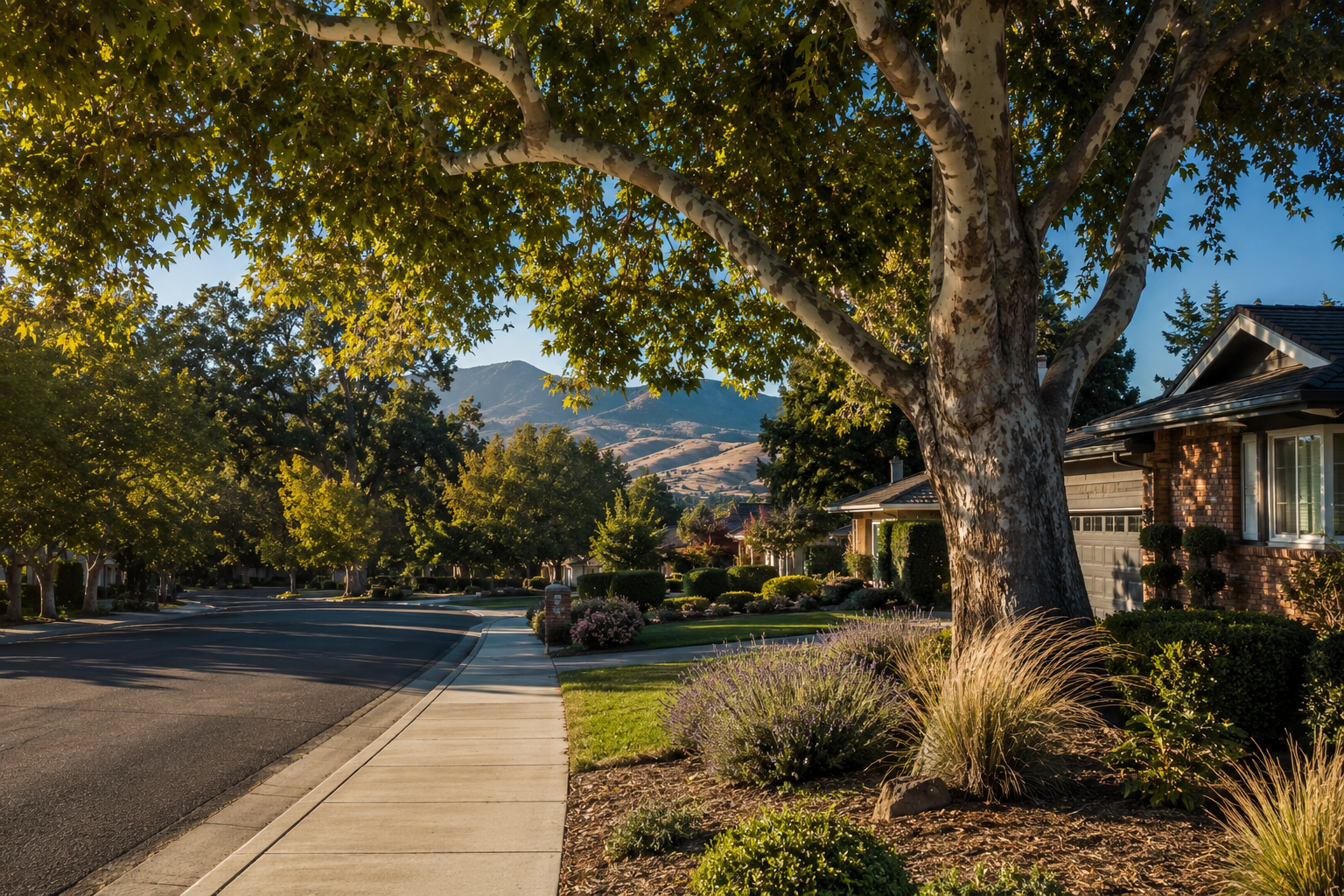
The Carrying Cost Gap: Dublin New Construction vs. Pleasanton Resale
A $1.35M new-construction home in East Dublin carries an unexpected monthly premium over online portal estimates because Mello-Roos CFD special taxes and master HOA assessments are omitted from generic mortgage calculators:
The math reveals that a $200,000 higher sticker price in Pleasanton results in only a ~$484/month net carrying difference once Dublin's CFD liens and HOA fees are added. Pleasanton buyers lock in mature 0.25-acre lots, walkable downtown access, and top-ranked PUSD schools without perpetual infrastructure bond debt. For an in-depth breakdown, read our Pleasanton vs. Dublin real estate guide.
What Is the California FAIR Plan and Should Tri-Valley Homeowners Be Worried?
The California FAIR Plan is the state-mandated property insurer of last resort when private carriers decline coverage due to wildfire hazard designations. In the Tri-Valley, hillside properties in Alamo (94507), the Danville foothills and Blackhawk (94506), and the western ridgeline of Pleasanton and San Ramon are increasingly reliant on FAIR Plan policies paired with supplemental Difference in Conditions (DIC) wraps.
The 30% Rate Hike Impact:
The California Insurance Commissioner approved a 30% average rate increase for the FAIR Plan effective October 15, 2026. For a hillside home currently carrying a $5,500 annual combined premium, that adds roughly $1,650/year ($138/month) in non-mortgage carrying expenses.
Fiduciary Seller Strategy: If your home sits in a designated Very High Fire Hazard Severity Zone (VHFHSZ), obtain a binding insurance quote prior to listing. Disclosing the quote upfront prevents buyer panic and protects deal certainty. Valley floor parcels in central Pleasanton, Dublin, and San Ramon remain eligible for standard admitted carrier policies.
Which Tri-Valley City Holds Value Best During a Tech Downturn?
Historical pricing through 2025–2026 demonstrates that Alamo and Danville provide the strongest asset preservation during tech corrections. Their buyer pool is composed disproportionately of executive leadership, private wealth, and multi-generational business owners less vulnerable to corporate layoffs.
- SRVUSD School Foundation: Monte Vista High and San Ramon Valley High anchor property demand in Danville and Alamo independently of corporate fortunes.
- Pleasanton’s Resilient Core: Downtown Pleasanton, Kottinger Ranch, and Ruby Hill maintain premium valuation stability, while mid-tier northern subdivisions experienced brief absorption normalization following Workday cuts.
- Livermore’s Federal Anchor: Supported by Lawrence Livermore National Laboratory and Sandia National Laboratories, Livermore’s employment base is completely decoupled from private venture capital and tech restructuring cycles.
To evaluate how property values scale across price tiers, explore our guide to $2M vs. $2.5M luxury homes in Pleasanton.
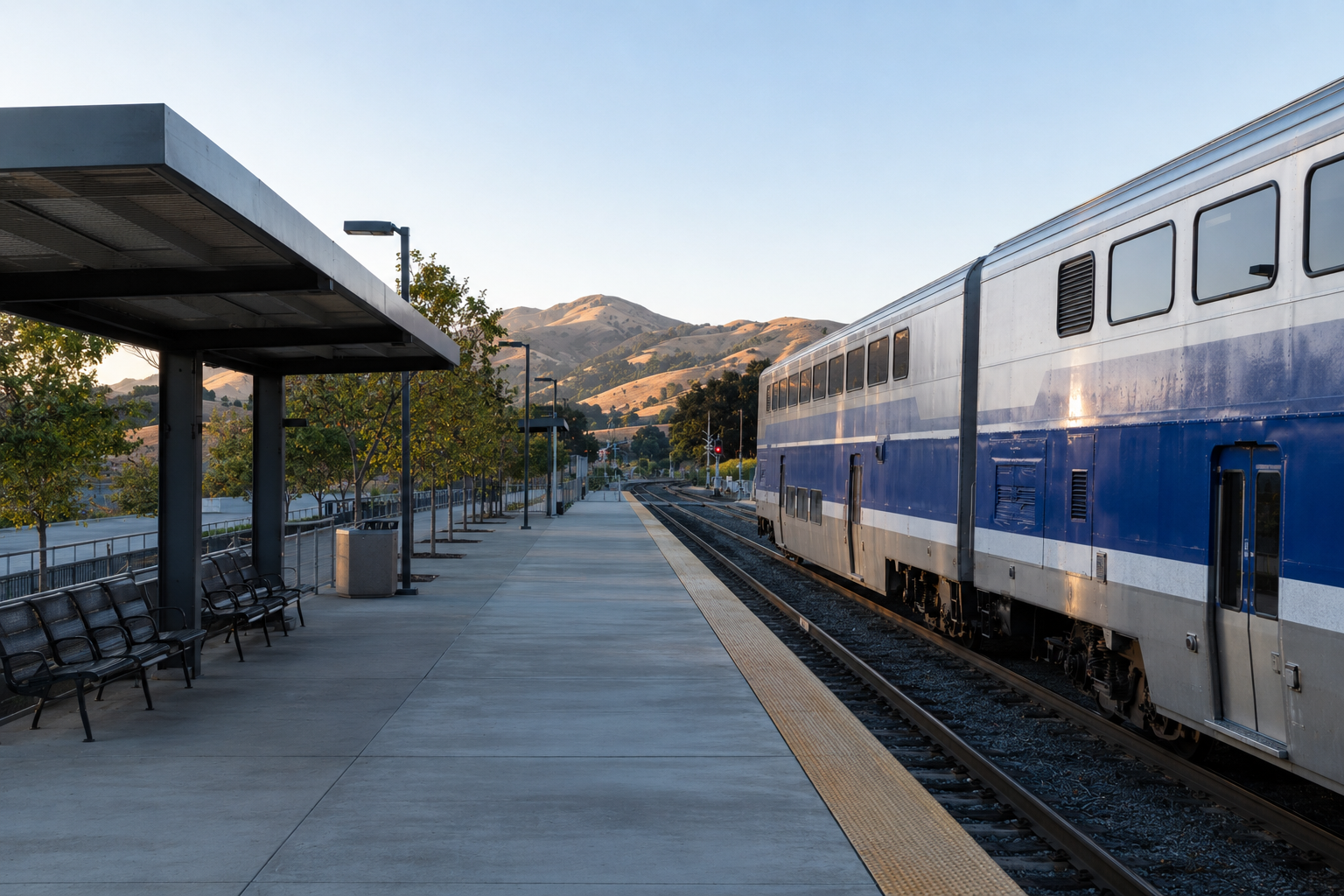
Realistic Commute Profiles: ACE Rail, Highway Corridors & Transit Savings
Commute accessibility directly influences neighborhood price resilience. For tech employees required in-office 2 to 3 days per week, transit logistics dictate property demand:
- BART to San Francisco: Dublin/Pleasanton and West Dublin BART stations provide ~48-minute transit to Embarcadero, eliminating Bay Bridge traffic variability entirely.
- The ACE Rail Advantage to Santa Clara: The ACE Rail train from Pleasanton and Livermore connects directly to Great America in Santa Clara in ~45 to 55 minutes. Tech employees at Apple, Google, and NVIDIA utilize onboard Wi-Fi to work during transit, bypassing the Sunol Grade entirely.
- Driving Bottlenecks: Peak highway drives to Mountain View or Palo Alto span 70 to 95 minutes during the 7:15 AM to 8:30 AM rush. Learn how different neighborhoods position relative to freeway on-ramps in our guide to the best Pleasanton neighborhoods for Silicon Valley tech commuters.
Top Five Reasons Tri-Valley Luxury Home Sales Fall Apart in 2026
- Mid-Escrow Employment Verifications: Lenders conducting verbal employment verification within 48 to 72 hours of closing; sudden corporate layoffs or RSU restructuring instantly terminate jumbo loan approval.
- Appraisal Gaps on Stale Comps: Slower winter transaction volume leads appraisers to cite lower-priced comps, creating a $50,000 to $100,000 cash shortfall for the buyer.
- Hillside Insurance Denial: Private carrier underwriting cancellations in VHFHSZ foothill zones triggering contingency termination when FAIR Plan quotes exceed buyer monthly debt-to-income limits.
- Inspection Findings on 1980s Resale: Sewer lateral root intrusion, deteriorated concrete tile roof underlayment, or HVAC replacement demands on mature estates.
- Mello-Roos CFD Discovery: Buyers discovering active $3,500+/year special assessments on newer parcels that were undisclosed in preliminary MLS descriptions.
Is AI Wealth Creation Real Enough to Replace Tech Layoff Demand?
AI-driven wealth is real, but its impact is concentrated at the top. Liquid equity gains from AI pioneers and major semiconductor firms flow directly into the $3.0M to $6.0M luxury tier in Alamo, Upper Danville, and Ruby Hill.
However, AI wealth has not replaced displaced buyer demand in the $1.2M to $1.8M mid-market, which remains tethered to traditional engineering and sales compensation at legacy software firms. For homeowners in the $1.5M to $2.5M bracket, pricing discipline is critical: homes priced accurately to active spring comps close within two weeks; homes aspiring to peak 2024 pricing sit for 45+ days and ultimately concede the same market price with added carrying expense.
Frequently Asked Questions
Have tech layoffs caused Tri-Valley home prices to drop in 2026?
Tech layoffs have applied selective pressure on Tri-Valley mid-market home prices without triggering broad regional declines. Alamo's median rose 8.1% year-over-year to $3.1M while San Ramon fell 10.9% to $1.5M in March 2026. The divergence reflects a K-shaped market where AI sector wealth creation supports luxury demand above $3.1M while legacy tech employment contraction softens the $1.2M–$1.8M buyer pool — the range most dependent on salaried tech workers.
How did Workday's layoffs specifically impact Pleasanton's housing market?
Workday's local WARN notices—totaling 771 documented job reductions across 2025 and early 2026 at its Pleasanton headquarters—directly removed qualified high-income buyers from central neighborhoods like Val Vista, Vintage Hills, and Neal. This softened mid-tier buyer velocity, extending days on market from 12 to 25 days. However, Pleasanton's high school attendance premiums (Amador Valley and Foothill), historic Main Street, and diversified business park base prevented a broad market decline.
Is now a good time to sell a Tri-Valley home, or should I wait for mortgage rates to drop?
The decision to sell should depend on personal timelines, deferred maintenance, and insurance exposure rather than macro interest rate forecasting. Waiting for rates to drop carries three distinct risks: compounding deferred maintenance on 1970s–1990s homes, rising inventory levels (up ~24% year-over-year in spring 2026), and escalating California FAIR Plan property insurance rates taking effect for hillside parcels.
How does the California FAIR Plan rate increase affect Tri-Valley home sellers?
The California FAIR Plan rate increase directly impacts homes located in designated hillside and Wildland-Urban Interface (WUI) zones—including Alamo, Danville foothills, Blackhawk, and the San Ramon ridgelines. With annual premiums running $4,000 to $8,000+ for combined FAIR Plan and DIC policies, higher insurance carrying costs reduce buyer purchasing power and create mid-escrow negotiating friction.
What is the true monthly cost difference between Dublin new construction and Pleasanton resale?
While a Dublin new-construction home may carry a lower purchase price ($1.35M vs. $1.55M in Pleasanton), Dublin's Mello-Roos CFD taxes ($1,000–$4,000+/year) and master HOA assessments ($250–$350/month) add $500 to $650/month in non-deductible carrying costs. This narrows the monthly ownership difference to approximately $646/month, while Pleasanton resale properties offer larger lots (0.25 vs 0.10 acres), mature trees, and zero Mello-Roos.
Which Tri-Valley city holds home values best during tech downturns?
Alamo and Danville demonstrate the strongest value stability during tech contractions because their buyer pools consist largely of corporate executives, multi-generational equity holders, and private business owners with deep balance sheets. Livermore also displays strong structural insulation due to federal laboratory employment anchors (Lawrence Livermore and Sandia) that are immune to private tech layoff cycles.
What are the top reasons Tri-Valley luxury home escrows fall apart in 2026?
The top five deal-failure mechanisms in 2026 are: (1) financing denial triggered by tech layoffs or RSU re-evaluations within 48 hours of closing; (2) appraisal shortfalls driven by stale winter comparable sales; (3) insurance cancellation or unaffordable quotes in hillside fire zones; (4) major inspection findings on pre-1990 homes (sewer laterals, roofs, foundation drainage); and (5) buyer discovery of undisclosed Mello-Roos CFD special assessments.
Is AI sector wealth replacing tech layoff demand in the Tri-Valley?
AI wealth creation is concentrated primarily in the luxury tier above $3.0M, providing strong buyer demand for high-end estates in Alamo, upper Danville, and Ruby Hill. However, AI equity gains have not replaced lost demand in the $1.2M to $1.8M entry-to-mid-tier market, which remains dependent on traditional salaried tech workers who face corporate hiring freezes and headcount reductions.
Categories
Recent Posts