Why Luxury Homes in Pleasanton Are a Smart Investment in 2026

Tri-Valley Capital Allocation & Wealth Preservation
When high-net-worth buyers evaluate residential acquisitions in the East Bay, the initial conversation often centers on aesthetic lifestyle features: championship golf course access, lot acreage, and interior architectural finishes. But for buyers deploying $3M to $6M+ in liquid capital or vested equity, the core question is structural: Is a luxury home in Pleasanton a fundamentally sound place to park capital in the current market cycle?
The answer is yes—provided you understand which submarket corridors possess unassailable demand moats, how the shift from legacy tech compensation to artificial intelligence (AI) liquidity is reshaping the regional buyer pool, and how to underwrite ongoing carrying costs. In 2026, casual suburban narratives must yield to rigorous asset-class underwriting.

Direct Answer: Luxury homes in Pleasanton, CA ($2.5M to $6M+) represent a highly defensive, smart wealth-preservation investment in 2026 because they are protected by four structural moats: (1) Strict Urban Growth Boundaries that cap land supply and prevent new tract development; (2) The Pleasanton Unified School District (PUSD) Moat, where Foothill and Amador Valley High School attendance zones provide an enduring $200,000–$350,000 resale valuation floor; (3) K-Shaped Market Resilience, where high-equity executives and AI-sector liquidity insulate the luxury tier from mortgage rate fluctuations; and (4) Dual-Rail Infrastructure (BART to San Francisco and ACE Rail to Silicon Valley) that preserves regional executive liquidity. Unlike newer master-planned developments in East Dublin or San Ramon, established Pleasanton luxury tracts carry zero Mello-Roos CFD special taxes.
1. The K-Shaped Market: Why Luxury Is Outperforming the Mid-Tier
The Tri-Valley real estate market no longer moves in unison. We are navigating a pronounced K-shaped economic bifurcation. While the $1.2M to $1.8M entry-and-mid market has experienced price sensitivity and extended absorption timelines due to legacy tech restructuring and elevated interest rates, the luxury tier ($2.5M to $6M+) has demonstrated remarkable pricing power and resilience.
Why the Luxury Buyer Profile Is Decoupled from Mortgage Rates:
The mid-market relies heavily on salaried tech professionals utilizing high-leverage financing with conforming or low-down jumbo loans. In contrast, the luxury estate tier is propelled by senior executives, corporate leaders, and early-stage AI/infrastructure engineers liquidating secondary equity windfalls.
- Substantial Cash Reserves: Over 45% of luxury transactions above $2.5M in South Pleasanton involve cash purchases or down payments of 40% to 60%, neutralizing mortgage rate spikes.
- AI & Enterprise Software Equity: Wealth generated from semiconductor growth, private venture secondaries, and AI infrastructure directly funds primary estate acquisitions in enclaves like Ruby Hill and Vintage Hills.
- Flight to Tangible Capital Preservation: High-net-worth investors view land-constrained Bay Area real estate as an inflation hedge superior to volatile liquid equities.
For an analytical breakdown of how corporate headcount changes have influenced submarkets differently, read our detailed report: Are Tech Layoffs Actually Hurting Your Tri-Valley Home Value?
2. Pleasanton Luxury Investment Corridors: Asset Styles & Liquidity Matrix
Location and architectural style determine price per square foot, holding costs, and exit liquidity in Pleasanton. Here is how the primary luxury corridors compare in 2026:
For an in-depth financial comparison of how purchasing power scales between these tiers, review our analysis: $2M vs. $2.5M Pleasanton Luxury Homes: What That Extra $500K Buys.
3. The PUSD Educational Moat: A Structural Price Floor
In sophisticated real estate underwriting, you look for structural "economic moats"—durable factors that protect an asset's valuation during broader market contractions. In Pleasanton, the most reliable moat is the Pleasanton Unified School District (PUSD) boundary, specifically parcel assignments feeding into Amador Valley High School and Foothill High School.
The Documented $200K–$350K Attendance Premium:
Properties within verified PUSD high school boundaries command a historical resale premium of $200,000 to $350,000 over comparable homes in neighboring school districts. Even when broader macroeconomic conditions pause discretionary buying, there is a continuous, self-replenishing stream of relocating executive families moving from the Peninsula and South Bay specifically to enroll in PUSD.
Fiduciary Underwriting Rule: Never rely on automated third-party portal overlays. Attendance zones are parcel-specific. For example, residential parcels in Ruby Hill feed into Foothill High School following district redistricting, not Amador Valley. Verifying parcel-specific assignments is mandatory prior to removing purchase contingencies.
For families also evaluating independent college-preparatory alternatives, explore our guide to top private schools near Pleasanton (Quarry Lane, Athenian & BASIS).
4. Managing Capital Reality: Proposition 13 and Carrying Costs
A comprehensive investment thesis requires an unvarnished audit of ongoing carrying costs. While California's Proposition 13 limits annual taxable assessment increases to 2%, it also triggers an immediate reassessment to the contract purchase price upon transfer.
Carrying Cost Variables on a $3M–$4.5M Pleasanton Estate:
- Base Property Tax Allocation: A $4,500,000 estate in Ruby Hill resets to approximately $53,100 annually (~$4,425/month) at an effective 1.18% rate, irrespective of the prior owner's assessment.
- Post-Closing Supplemental Taxes: The Alameda County Assessor issues supplemental bills reflecting the stepped-up value gap, requiring liquid cash reserves post-escrow.
- The Zero Mello-Roos Advantage: Established luxury neighborhoods in Pleasanton carry zero Mello-Roos CFD special assessments, saving homeowners $3,000 to $8,000 annually compared to newer master-planned developments in East Dublin or San Ramon. Review our full comparison in Pleasanton vs. Dublin real estate and taxes.
- California FAIR Plan Exposure: Hillside estates in Castlewood or Foothill Road sit in designated Wildland-Urban Interface (WUI) zones. Homeowners must budget for combined FAIR Plan and DIC insurance policies running $4,000 to $8,000+ per year, which will be impacted by the state's upcoming rate adjustments.
- HOA Governance: Ruby Hill master association dues average $255 to $310 per month, which funds 24/7 manned security gatehouses and community parks. For complete fee schedules, see our analysis of Ruby Hill vs. Castlewood HOA fees and country club costs.
For an exhaustive balance sheet projection including impound accounts and utility reserves, review our full fiduciary report on the hidden costs of buying a luxury home in Pleasanton.
5. The Trans-Bay Commute Moat: Dual BART Stations & ACE Rail
Pleasanton holds an unmatched infrastructural asset over deeper suburban luxury markets like Danville or Alamo: dual-rail transit connectivity paired with the direct Interstate 580 and 680 interchange.
- San Francisco BART Transit: As major corporate employers enforce 3-to-4-day weekly return-to-office mandates, two-hour freeway gridlocks have become untenable. Pleasanton’s dual BART access (Dublin/Pleasanton and West Dublin stations) delivers predictable ~48-minute transit directly to the Embarcadero financial core.
- Silicon Valley ACE Rail Train: The Pleasanton ACE Station connects South Bay tech executives directly to Great America (Santa Clara) in 45 minutes and San Jose Diridon in 55 minutes, bypassing the congested I-680 Sunol Grade entirely.
- Regional Asset Liquidity: This dual-rail transit infrastructure ensures that a Pleasanton luxury estate remains attractive to a broad regional buyer pool—appealing equally to San Francisco venture capital partners and South Bay hardware executives.
To understand how different neighborhoods position relative to commute on-ramps, see: The Best Pleasanton Neighborhoods for Silicon Valley Commuters.
6. Where to Start: Capital Deployment Framework by Investor Profile
When clients ask where to deploy capital within Pleasanton luxury real estate, we guide them through a profile-driven selection framework:
- For Maximum Resale Liquidity & Broadest Buyer Base: Target turn-key homes ($1.8M to $2.6M) in Vintage Hills, Birdland, or Del Prado. These non-gated properties feature zero HOA dues, large flat lots, and high absorption velocity (averaging 7 to 14 days on market).
- For Executive Security & Gated Prestige: Target interior cul-de-sac or ridge view lots in Ruby Hill ($2.8M to $5M+). Non-golfers avoid fairway noise while enjoying 24/7 security and estate-scale living. Read our dedicated guide: Is Ruby Hill Worth It for Non-Golfers?
- For Luxury Downsizers & Single-Level Living: Focus on single-story custom ranch estates in South Pleasanton. Review our curated advisory: The Best Pleasanton Neighborhoods for Luxury Downsizers.
- For Relocating Families Planning 10-Year Wealth Horizons: Consult our complete relocation overview: Moving to Pleasanton CA: 2026 Relocation, Schools & Cost Guide.
7. Turnkey Premium vs. Fixer Drag: 2026 Construction Economics
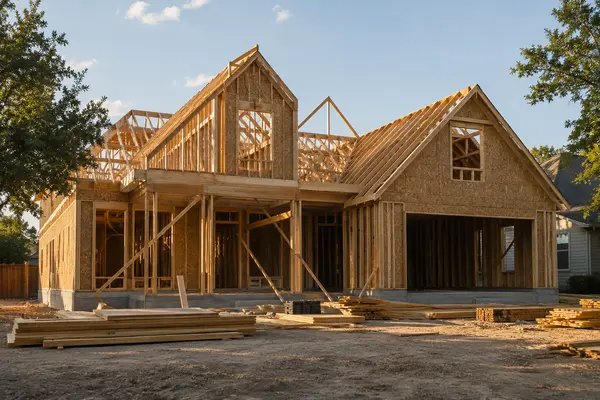
In the current market cycle, turnkey luxury estates command an unprecedented valuation premium. Because high-end general contractor rates in the Bay Area range from $350 to $600+ per square foot—and municipal permitting cycles paired with HOA Architectural Review Committee (ARC) approvals can take 4 to 8 months—dated luxury homes face severe buyer resistance.
Acquiring a fully modernized estate in Pleasanton eliminates construction carrying cost drag and capital expenditure uncertainty. For investors evaluating ground-up custom builds or major structural additions, review our audit of custom home development and city permit fees in Pleasanton.
Frequently Asked Questions
Why are luxury homes in Pleasanton considered a smart investment in 2026?
Luxury homes in Pleasanton ($2.5M to $5M+) function as premier wealth-preservation assets due to permanent structural moats: strict municipal urban growth boundaries preventing suburban sprawl, the top-ranked Pleasanton Unified School District (PUSD) providing an enduring price floor, dual BART stations and ACE Rail access ensuring regional executive liquidity, and complete exemption from Mello-Roos CFD taxes across established neighborhoods. Unlike mid-tier housing exposed to tech employment pauses, Pleasanton's luxury tier is supported by cash-heavy buyers deploying AI sector equity and corporate wealth.
How does the K-shaped real estate market affect Pleasanton luxury home values?
The K-shaped market has bifurcated Tri-Valley real estate: while the $1.2M to $1.8M entry-and-mid tier has softened due to mortgage rate sensitivity and legacy tech layoffs, the $2.5M+ luxury market has shown remarkable appreciation and stability. High-net-worth buyers in Pleasanton deploy large cash down payments (often 40% to 100% cash) monetized from AI, enterprise cloud software, and private equity, insulating luxury estates in Ruby Hill, Vintage Hills, and Downtown from interest rate fluctuations.
What is the educational moat of Pleasanton Unified School District (PUSD)?
PUSD ranks #1 among public school districts in Alameda County, with flagship campuses Foothill High School and Amador Valley High School both achieving 70%+ math proficiency and high Ivy League and UC Berkeley matriculation. Properties within verified PUSD high school attendance boundaries command a documented $200,000 to $350,000 resale premium over comparable homes in adjacent districts, creating a permanent, replenishing pool of family demand that cushions asset values during economic downturns.
How do location and neighborhood styles affect luxury home prices in Pleasanton?
Location dictates both price per square foot and lifestyle appeal in Pleasanton. Gated golf communities like Ruby Hill ($2.8M–$6M+) command premiums for 24/7 security and estate-scale parcels. The Downtown Core commands the highest price per square foot ($850–$1,050/sq. ft.) due to extreme inventory scarcity and walkable dining. Foothill neighborhoods like Vintage Hills and Kottinger Ranch offer flat, spacious 0.25-acre lots favored by luxury downsizers, while Castlewood provides custom wooded hillside acreage with dramatic valley views.
What carrying costs must luxury property investors underwrite in Pleasanton?
Investors must underwrite: (1) California Proposition 13 property taxes resetting to 1.15%–1.25% of purchase price (~$34,500/year on a $3M home); (2) post-closing supplemental tax bills; (3) HOA dues ($255–$310/month in Ruby Hill master HOA; $0 in established tracts like Vintage Hills); (4) routine estate maintenance reserves (~1% of asset value annually); and (5) California FAIR Plan fire insurance premiums for hillside parcels in designated Wildland-Urban Interface (WUI) zones like Castlewood.
How does commuter rail access protect real estate liquidity in Pleasanton?
Pleasanton features multi-modal transit unmatched by deeper East Bay suburbs like Danville or Alamo. The Dublin/Pleasanton and West Dublin BART stations provide direct 48-minute rail transit to Downtown San Francisco, while the Downtown Pleasanton ACE Rail train connects tech workers directly to Silicon Valley (Santa Clara and San Jose) in 45 to 55 minutes. This dual-rail infrastructure protects luxury asset liquidity as corporate employers mandate 3-to-4 day weekly in-office attendance.
Where should an investor start when entering the Pleasanton luxury market?
Investors should begin by defining their liquidity and holding horizon. For maximum resale liquidity and broad family appeal, target turn-key single-story or updated two-story homes ($2.0M–$2.8M) in Vintage Hills, Birdland, or near Downtown Main Street. For private executive estate living with 24/7 security, target interior cul-de-sac or ridge view lots in Ruby Hill ($2.8M–$4.5M+). Always audit parcel-specific PUSD school boundaries, title CFD exemptions, and hazard zones prior to making an offer.
Are turn-key luxury homes a better investment than fixer estates in Pleasanton?
In the 2026 market cycle, turn-key luxury properties substantially outperform fixer estates on an investment-return basis. Extended municipal permitting timelines, architectural review committee (ARC) approval windows, and elevated contractor labor costs ($350–$600/sq. ft. for luxury remodeling) create severe carrying cost drag on dated homes. Turn-key estates in premier Pleasanton neighborhoods capture immediate buyer demand and command higher price-per-square-foot premiums at resale.
Categories
Recent Posts